Exterior insect activity in Middle Tennessee surges between late spring and early autumn as rising temperatures drive colony expansion across residential architecture. In historic neighborhoods like East Nashville,…
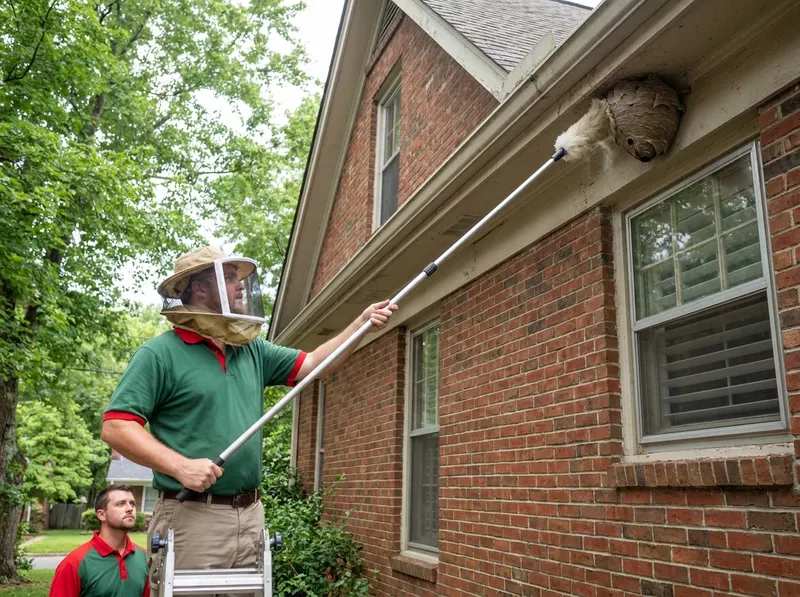
Exterior insect activity in Middle Tennessee surges between late spring and early autumn as rising temperatures drive colony expansion across residential architecture. In historic neighborhoods like East Nashville, Germantown, and Belmont-Hillsboro, older wood fascias, deep porch soffits, and ornate rafter tails offer sheltered voids for University of Tennessee Extension documented paper wasp colonies. Rather than blanket broadcast spraying that leaves chemical residues where children and animals play, CoastalElm Pest Treatment utilizes targeted vacuum extraction and manual pole detachment. Technicians apply targeted micro-barrier dusts compliant with EPA pesticide safety standards directly into structural voids, halting rebuild cycles without contaminating surrounding foliage or indoor air systems.
Suburban settings in Green Hills, Sylvan Park, and 12 South present distinct nesting environments, particularly around multi-tier cedar decks, outdoor kitchens, and playground sets. Mud daubers and aggressive yellowjackets often settle along shaded ground-level foundations or crawlspace perimeter vents, exploiting the natural humidity documented by the National Weather Service Nashville office. The protocol involves identifying primary entry points around masonry ledges and siding junctions. Technicians eliminate aerial nests and underground ground-wasp burrows under guidance from the Agriculture and Agri-Food standards on non-target pollinator preservation, preventing secondary scavengers like ants or carpet beetles from infesting residual comb material.
Choosing targeted physical removal over broad-spectrum subscription spraying provides a specific trade-off between environmental health and convenience. A blanket pesticide application coats exterior walls, but rainwater runoff often carries active ingredients toward municipal drainage zones monitored by the Metro Water Services department. In contrast, mechanical nest removal combined with localized botanical repellent creates immediate physical relief without long-term soil toxicity. Properties bordering heavily wooded corridors, such as Donelson and Inglewood near the Cumberland River or Antioch residences abutting regional greenways, experience elevated forage traffic from the Tennessee Wildlife Resources Agency native habitats. Proper structural exclusion and caulking prevent recurring establishment far more effectively than chemical layers alone.
Technicians follow safety protocols aligned with OSHA jobsite fall protection regulations when servicing heights exceeding single-story rooflines. Every exterior diagnostic checks attic soffit vents, utility penetrations, and chimney flashing to ensure venomous insects cannot retreat inward into living spaces. Guidance from the CDC NIOSH stinging insects advisory governs proper personal protective gear during hornet extraction, ensuring surrounding residential spaces remain peaceful and secure throughout the treatment.
Every job gets a firm, written price after a free on-site visit.
Tell us about your wasp and stinging insect exterior removal job in Nashville and we'll send a clear, written quote, usually the same day.
 CoastalElm Pest Treatment